October 20, 2026
Arabic greetings and etiquette: what to know before you say "marhaba"
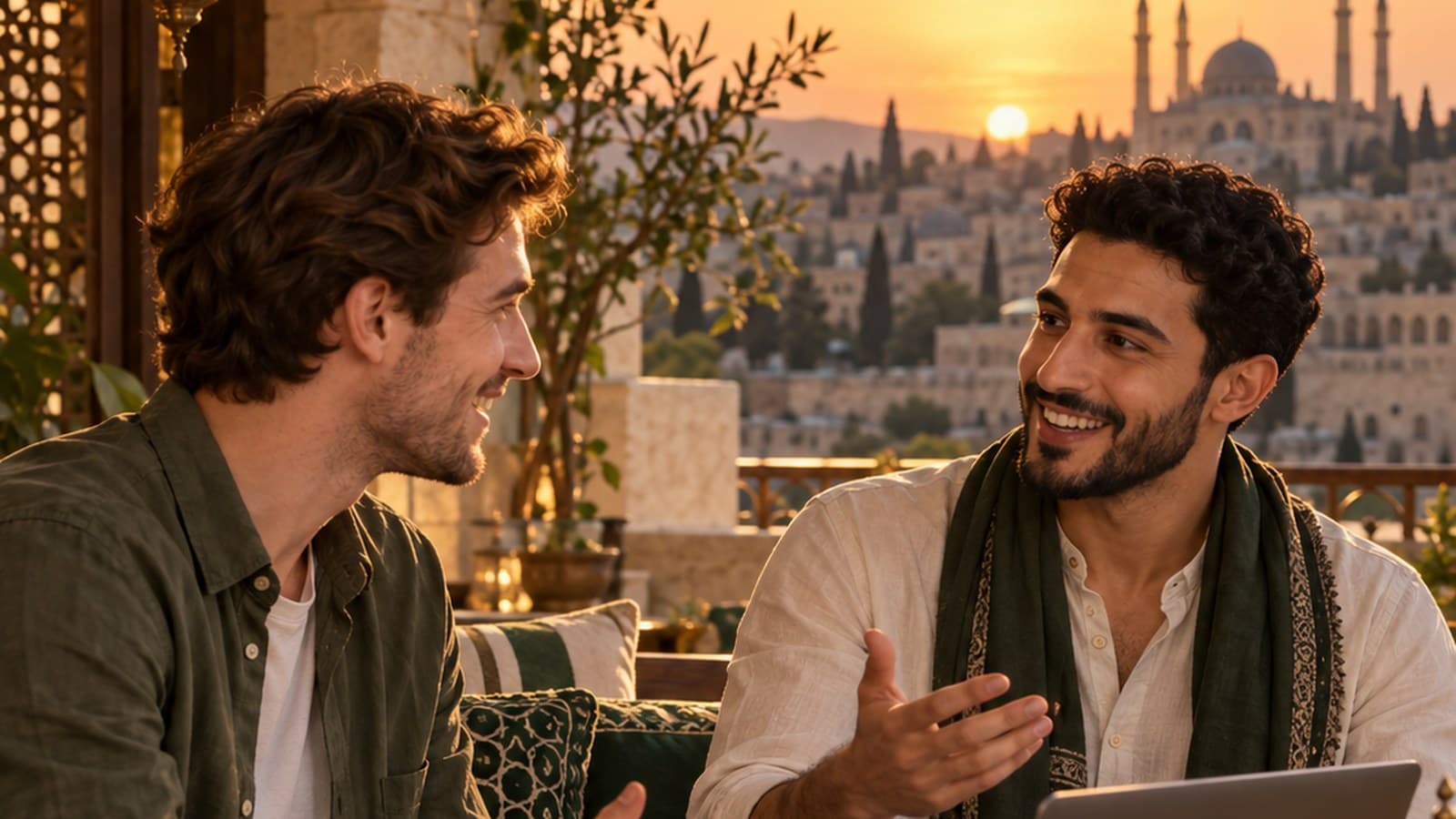
Greetings in Arabic-speaking cultures tend to be longer, more ritualized, and more socially meaningful than a quick English "hi, how are you" — skipping the expected exchange, or cutting it short, reads as noticeably more abrupt than it would in English.
The religious greeting is extremely common, including in secular contexts
"As-salamu alaykum" (peace be upon you) and its reply "wa alaykum as-salam" are used across the Arab world as an everyday greeting, not only in religious settings, by speakers of multiple faiths. "Marhaba" (hello) is a safe, universally understood alternative for any context, religious or not, which makes it a reasonable default for a learner who isn't sure which is more appropriate for a given situation.
The greeting exchange is often longer than one phrase
A common pattern is greeting, asking after the other person's well-being, and sometimes asking after their family's well-being, before moving to the actual topic of conversation — skipping straight to business can come across as curt in a way it typically wouldn't in a brisk English-speaking context. This varies by country and setting, but erring toward a slightly longer, warmer exchange is rarely wrong.
Right-hand etiquette extends to greetings
In much of the Arab world, the right hand is used for greetings, handing things over, and eating, with the left hand traditionally considered less appropriate for these purposes. This is a widely-held cultural norm worth knowing even for a learner who's only ever interacting with Arabic speakers abroad, since it comes up in handshakes and exchanging items alike.
Titles and formality matter more than in casual American English
Using an honorific with someone's first name (the Arabic equivalent of "Mr." or "Dr." plus first name, rather than surname) is common and generally expected with anyone older, more senior, or simply new to you, until they invite more casual address. Jumping straight to first names with no title, which reads as normal friendliness in American English, can come across as presumptuous in a first interaction.
The short version
When in doubt: use "marhaba" if you're unsure about "as-salamu alaykum," don't rush past the well-wishing part of a greeting, use your right hand, and default to a title with someone's name until told otherwise. None of this requires fluency — it's a short list of habits that signal respect regardless of how much Arabic you actually speak yet.
Want help figuring out your own starting point?
A free intro call with Reham sorts out Fusha vs. dialect for your specific goal.